Hermès Herbag Backpack in Ebene Toile and Vache Hunter Leather with Gold Hardware
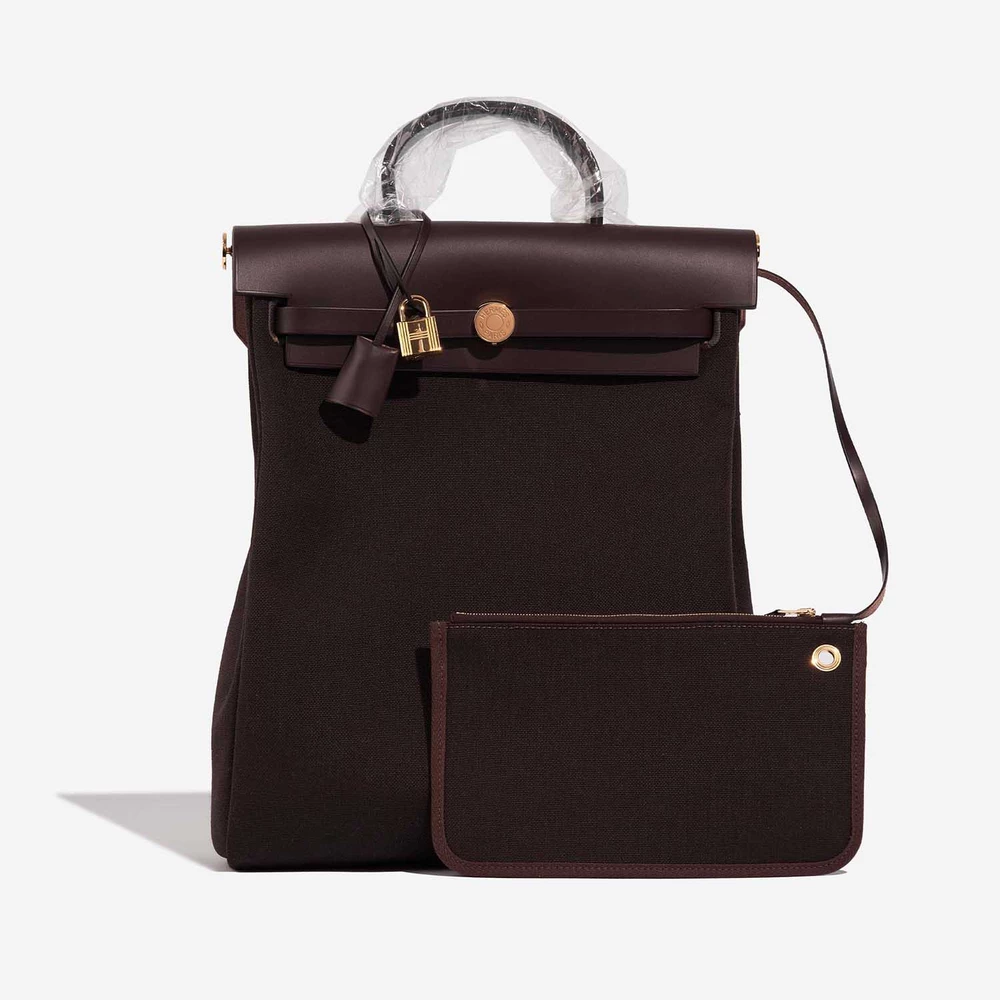
The Hermès Herbag Backpack in Ébène Toile and Vache Hunter Leather with Gold Hardware is an elegant interpretation of the Maison's equestrian-inspired approach to functional design. Combining durable textile construction with structured leather detailing, the backpack offers a distinctive alternative to Hermès' more formal leather handbags. Its deep Ébène canvas, Vache Hunter leather accents, and gold-plated hardware create a sophisticated palette that feels both practical and timeless.
The Herbag family is particularly notable because its design language is built around the contrast between canvas and leather. Rather than hiding the textile body beneath layers of rigid construction, the design makes the canvas an important part of the aesthetic. Hermès describes the Herbag as a bag composed of a canvas body and an unlined leather flap, with signature details including straps, a bell, and the Clou de Selle clasp.
The backpack version translates these recognizable characteristics into a hands-free format. A documented Ébène Toile and Vache Hunter Herbag backpack measures approximately 30 × 35 × 11 cm and features gold-plated hardware, a detachable pouch, clochette, lock, keys, and other accompanying accessories.
The Herbag Design Philosophy
The Herbag occupies an interesting position within the Hermès collection. It has the recognizable finishing and craftsmanship associated with the Maison but approaches luxury through practicality rather than overt formality.
The basic concept centers on a textile body combined with leather structural elements. This allows the bag to maintain a relatively relaxed appearance while retaining distinctive Hermès signatures.
The Clou de Selle closure is especially important. Originally associated with equestrian equipment, this hardware detail has become a recognizable motif throughout Hermès designs. On the Herbag, it helps connect the practical canvas construction with the Maison's equestrian heritage.
The backpack version extends this philosophy even further. Instead of being designed primarily for hand or shoulder carrying, it distributes the bag's weight across the back, making it appropriate for commuting, travel, shopping, and other situations where freedom of movement is useful.
Ébène Toile: Deep, Understated Color
The Ébène color gives this Herbag Backpack a particularly sophisticated character.
Ébène, associated with a deep brown or ebony-inspired palette, is considerably more understated than brighter Hermès canvas colors. It provides a neutral foundation that works naturally with black, cream, beige, camel, navy, denim, and other wardrobe staples.
The darker textile also creates an attractive relationship with the Vache Hunter leather. Instead of creating a high-contrast color-blocked appearance, the combination remains within a warm, earthy palette.
This makes the backpack particularly versatile.
It can accompany a casual weekend wardrobe just as naturally as a more refined travel outfit. A neutral coat, denim, knitwear, leather shoes, or tailored trousers can all work with the deep brown palette.
Gold hardware adds a controlled element of brightness, preventing the overall design from becoming visually heavy.
Toile Construction
The textile body is one of the defining characteristics of the Herbag.
Canvas provides a different visual and tactile experience from the smooth or grained leathers used on many Hermès handbags. It gives the backpack a more relaxed, utilitarian quality while reducing the visual weight associated with an entirely leather construction.
Hermès' Herbag designs emphasize this contrast between textile and leather. The Maison describes the bag as having a canvas body with an unlined leather flap, while its functional design incorporates compartments and detachable elements.
On the Ébène version, the dark canvas creates an especially understated foundation.
The texture of the textile is also important. Rather than relying on shine, it introduces visual depth through its woven surface. This contrasts beautifully with the smoother Vache Hunter leather and the reflective gold-plated metal.
Vache Hunter Leather
The leather component is Vache Hunter, a material particularly suited to the structural requirements of the Herbag.
Hermès describes Hunter cowhide as a vegetable-tanned leather with a very firm hand. It is thick and dense and is particularly suitable for structured flaps, fastening cords, and straps. Hermès notes that Vache Hunter first appeared in its collections in 1998. Its appearance is described as smooth and slightly satiny, with the leather remaining relatively stable over time while becoming somewhat more satiny.
These characteristics make Vache Hunter an appropriate choice for a backpack.
The leather needs enough body to support straps, closures, and structural elements. A very soft leather would create a different visual character and could make the backpack appear less defined.
Instead, Vache Hunter gives the Herbag a sense of structure.
Its smooth surface also creates an effective contrast with the woven texture of the Ébène Toile.
Gold-Plated Hardware
The Gold Hardware provides the principal decorative contrast.
Gold-plated metal is used for the closure and other hardware elements, creating warm highlights against the deep brown canvas and leather.
This combination has a distinctly traditional Hermès character. The warmth of gold complements the earthy tones of Ébène and Vache Hunter particularly well.
The hardware is not excessive. It appears in strategically important places, allowing the construction of the backpack to remain visually clean.
The Clou de Selle closure becomes a focal point at the front, while the padlock and related components reinforce the recognizable Herbag identity.
A documented Ébène Toile/Vache Hunter backpack is specifically described as having gold-plated hardware.
The Signature Clou de Selle Closure
The Clou de Selle is one of the most recognizable details associated with the Herbag.
Its equestrian-inspired appearance connects the design to Hermès' historic relationship with saddlery and horse equipment.
On the backpack, the closure does more than secure the front flap. It also acts as a visual centerpiece.
The combination of leather straps, central closure, and gold-plated metal gives the front of the backpack a structured appearance even though much of the body is constructed from textile.
The closure system therefore illustrates one of the strengths of the Herbag design: functional components are simultaneously decorative elements.
Backpack Construction and Carrying Comfort
The backpack format transforms the Herbag into a hands-free everyday accessory.
The shoulder straps allow the weight to be distributed across the back rather than concentrated in one hand or on one shoulder. This makes the format especially useful for commuting, travel, sightseeing, shopping, and other situations requiring freedom of movement.
The documented Ébène version measures approximately 30 cm wide, 35 cm high, and 11 cm deep, giving it a relatively tall and useful profile.
The proportions allow the backpack to carry more than a compact handbag while remaining considerably more streamlined than a large travel pack.
A related Ébène Herbag backpack example is documented at approximately 30 cm at the base, 36 cm high, and 11 cm wide, demonstrating the general scale of this backpack format.
Because Hermès products are handmade, measurements can vary somewhat between individual examples.
Detachable Pouch
One of the most practical elements of the Herbag design is its detachable pouch.
A documented Ébène Toile/Vache Hunter backpack includes a removable pouch along with the clochette, keys, and lock.
The detachable pouch provides a convenient way to organize smaller belongings inside the larger backpack.
Items such as cards, keys, small accessories, or personal essentials can be separated from the main compartment, reducing the need to search through the entire bag.
The removable nature of the pouch also adds flexibility. It can be taken out when the user wants a simpler interior or used independently as a small organizational accessory.
Interior Organization
The Herbag family is designed around practical storage rather than an excessive number of small compartments.
Hermès describes Herbag designs as offering useful organizational features, including space for a laptop, a pocket for a phone and keys, and a detachable pouch depending on the model.
This philosophy carries naturally into the backpack format.
The large central compartment can accommodate everyday belongings, while the removable pouch provides separation for smaller objects.
The textile interior also reinforces the relaxed personality of the bag.
Instead of feeling like a rigid briefcase converted into a backpack, the Herbag retains the casual, adaptable character of a canvas-and-leather design.
The Equestrian Heritage
The Herbag's visual identity cannot be separated from Hermès' equestrian history.
The Maison began as a harness and saddlery business, and that heritage continues to influence contemporary designs through details such as leather straps, metal closures, bells, and structured leather components.
The Herbag is an especially clear example.
The Clou de Selle closure, leather straps, and bell-like clochette all contribute to an aesthetic that recalls traditional riding equipment without becoming costume-like.
The canvas body adds another practical reference. Textile bags have long been associated with travel and utility, making the combination of canvas and structured leather particularly appropriate for a design inspired by equestrian equipment.
Styling the Ébène Herbag Backpack
The neutral Ébène palette makes this backpack exceptionally easy to incorporate into a wardrobe.
For casual styling, it works naturally with denim, sneakers, knitwear, cotton shirts, and lightweight jackets.
For travel, it can complement neutral coats, leather footwear, tailored trousers, and layered knitwear.
The gold hardware also means the backpack can coordinate with gold jewelry and warm-toned accessories.
Because the bag itself is relatively understated in color, it can either blend into an outfit or act as a refined textural accent.
A particularly effective combination is Ébène with cream, ivory, camel, tan, or warm beige. These colors highlight the richness of the brown without creating an overly dramatic contrast.
Black can also work well, especially when the rest of the outfit contains brown or gold accents that connect visually with the backpack.
Craftsmanship
The appeal of the Herbag Backpack ultimately rests on the relationship between its materials and construction.
The textile body must be properly shaped and assembled, while the Vache Hunter leather must provide structural support at key points.
The straps need to be securely attached because they carry the weight of the backpack. The front flap and closure must align accurately, and the hardware must operate smoothly.
The contrast between soft textile and firm leather also makes precision especially important.
The Herbag may appear casual, but its construction contains numerous carefully considered details.
A documented Ébène Herbag example is described as having been handcrafted in France, while Hermès' current Herbag documentation likewise identifies its Herbag models as made in France.
Vache Hunter and Aging
Vache Hunter is particularly interesting because its appearance can evolve subtly.
Hermès describes the leather as relatively stable while becoming slightly more satiny over time.
This gives the leather a natural aging process without requiring dramatic transformation.
On an Ébène backpack, the smooth leather can gradually develop additional character through handling and use.
The canvas and leather may therefore age differently, creating the kind of material contrast that is characteristic of mixed-material Hermès designs.
For collectors, this gradual development can be part of the appeal.
Care and Preservation
The mixed-material construction means both the canvas and Vache Hunter leather should be treated carefully.
The textile should be protected from excessive moisture, staining, and prolonged exposure to harsh conditions. The leather should likewise be kept away from excessive water, oils, and abrasive surfaces.
Because Vache Hunter has a relatively firm and smooth finish, unnecessary scratching should be avoided.
The gold-plated hardware should not be exposed to abrasive cleaning products or aggressive polishing. Gentle handling is preferable, particularly around the Clou de Selle closure and other visible metal components.
When stored, the backpack should be kept in a dry environment away from prolonged direct sunlight. Maintaining its shape without overloading it is also helpful.
For significant stains, leather damage, or hardware concerns, professional Hermès care is preferable to attempting extensive home treatment.
Why the Combination Works
The success of the Ébène Toile and Vache Hunter with Gold Hardware configuration comes from the balance between its materials.
The canvas is practical and relaxed.
The Vache Hunter leather is structured and refined.
The gold hardware is decorative and functional.
The Ébène palette connects the materials into a cohesive whole.
Nothing feels excessively ornate, yet every component contributes to the visual identity of the backpack.
This is precisely what makes the Herbag distinctive. It is luxurious without needing to appear formal.
Collector and Everyday Appeal
The Herbag Backpack occupies an interesting space between heritage accessory and practical contemporary bag.
It has recognizable Hermès design signatures but avoids the formality of many classic leather handbags. Its backpack format also makes it especially relevant to modern lifestyles where hands-free carrying is increasingly useful.
The specific Ébène Toile/Vache Hunter configuration has been documented in examples produced in recent years, including a 2022 backpack measuring approximately 30 × 35 × 11 cm and featuring gold-plated hardware.
Its appeal therefore comes from both design and function.
For someone who wants an Hermès piece that can be used frequently rather than reserved for formal occasions, the Herbag Backpack offers an appealing solution.
Final Thoughts
The Hermès Herbag Backpack in Ébène Toile and Vache Hunter Leather with Gold Hardware is a sophisticated expression of functional luxury.
Its deep Ébène textile body provides a versatile foundation, while Vache Hunter leather supplies structure and reinforces the equestrian character of the design. Gold-plated hardware adds warmth and highlights the signature Clou de Selle closure, while the backpack format makes the piece practical for everyday movement.
The approximately 30 × 35 × 11 cm proportions provide useful capacity without creating an excessively bulky silhouette, and the detachable pouch adds valuable organization.
Ultimately, the Herbag Backpack succeeds because it combines utility, craftsmanship, heritage, and understated elegance. It does not need an elaborate silhouette or an abundance of decoration to make an impression. Its appeal lies in the carefully considered relationship between Ébène Toile, Vache Hunter leather, gold hardware, and the unmistakable equestrian details that have made the Herbag one of Hermès' most distinctive casual designs.


Comments
Post a Comment